Low Sperm Count or Poor Motility? 7 Reasons Men Struggle With Fertility
Trying for a baby but pregnancy is taking longer than expected? Learn seven possible causes of low sperm count and poor motility, what semen analysis can reveal and the next steps men should consider.
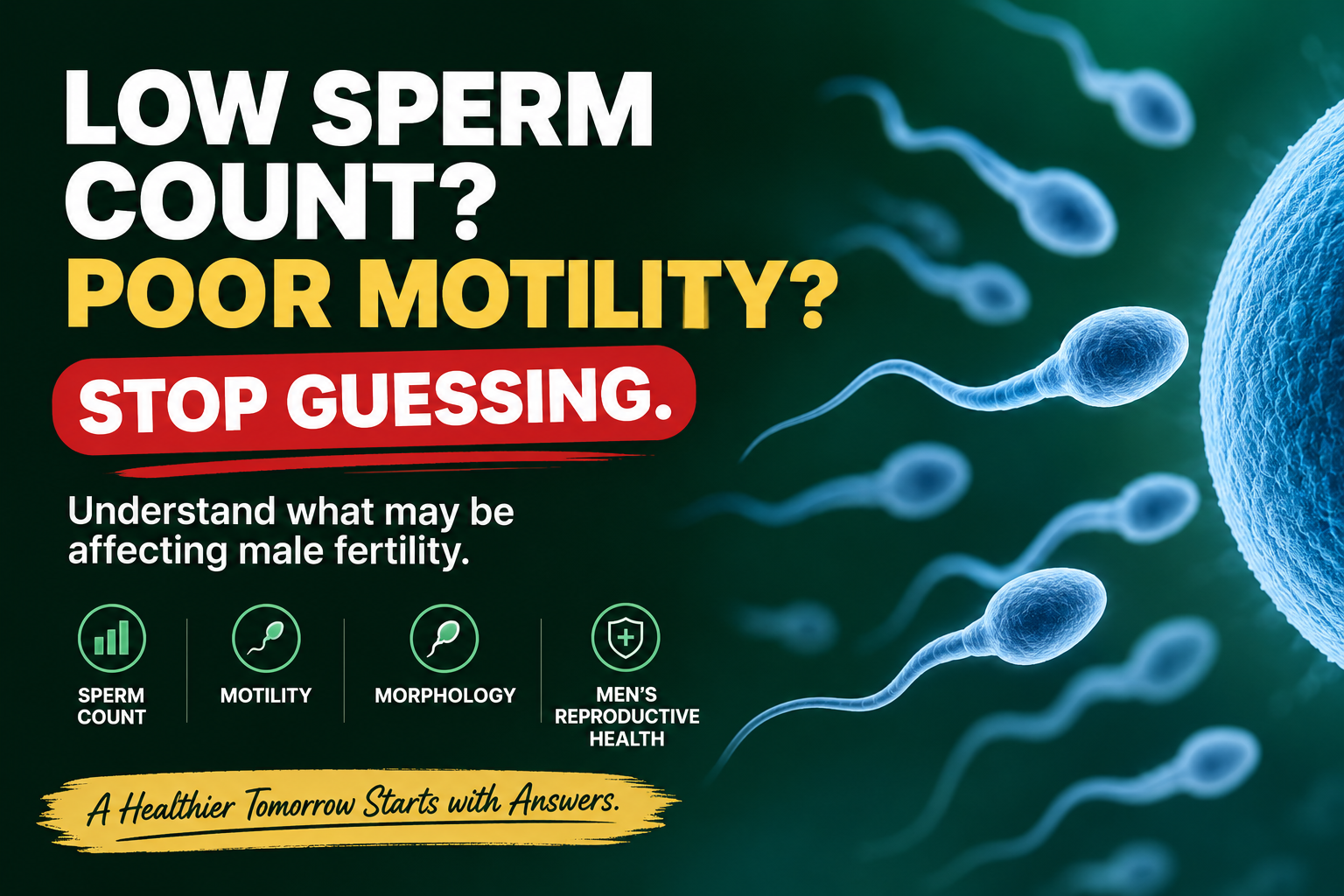
Low Sperm Count or Poor Motility? Stop Guessing.
When pregnancy is taking longer than expected, male fertility deserves proper attention too. Low sperm count, poor movement and other sperm abnormalities can have causes worth investigating.
When a couple struggles to conceive, attention often goes immediately to the woman.
But conception involves two people.
Male fertility problems can involve sperm count, sperm movement, sperm shape, reproductive hormones, testicular health and other medical or lifestyle factors.
One of the biggest mistakes a man can make is assuming that because he feels healthy, his fertility must automatically be normal.
If pregnancy has not happened after months of trying, why keep guessing when proper fertility assessment can provide useful information about what may actually be happening?
7 reasons sperm count or motility may be affected
A low result does not automatically tell you the cause. Male fertility can be influenced by several different factors, which is why proper evaluation matters.
Varicocele
Enlarged veins around the testicle can affect the local environment needed for normal sperm production in some men. A qualified healthcare professional can determine whether a varicocele is clinically significant.
Hormonal problems
Testosterone and other reproductive hormones help regulate normal sperm production. Hormonal abnormalities may require laboratory testing and proper medical evaluation.
Infections or inflammation
Some infections and inflammatory conditions can affect reproductive organs or semen characteristics and may require appropriate medical treatment.
Excessive heat exposure
Frequent exposure of the testicles to excessive heat may temporarily interfere with normal sperm production in some circumstances.
Smoking, heavy alcohol use and substance exposure
Tobacco, excessive alcohol and some substances can negatively affect reproductive health as well as general health.
Weight, nutrition and lifestyle
Poor diet quality, obesity, inadequate physical activity, chronic stress and some nutritional deficiencies can contribute to an unfavorable reproductive-health environment.
Medical, genetic or unexplained factors
Fertility problems may sometimes be related to medications, previous injuries, medical conditions, genetic factors or causes that are not immediately obvious.
A semen analysis tells you more than just sperm count.
Proper semen analysis can help evaluate several characteristics that contribute to understanding male reproductive health.
Estimates how many sperm are present within a measured volume of semen.
Evaluates how sperm are moving and the proportion demonstrating different types of movement.
Examines sperm shape and structure using defined laboratory criteria.
Volume and other characteristics of the semen can also provide useful reproductive-health information.
One abnormal result does not automatically mean you cannot have children.
Sperm parameters can vary.
Illness, fever, medications, lifestyle changes, laboratory conditions and other factors can sometimes influence results.
Depending on the situation, a healthcare professional may recommend repeating a semen analysis or performing additional tests before drawing conclusions.
The goal is not to panic over a number.
The goal is to understand what the number may be telling you.
Why are supplements sometimes considered in male fertility support?
Supplements are often marketed aggressively to men who are worried about fertility.
But taking random products without understanding the underlying issue is not the same thing as having a fertility plan.
Nutrition still matters.
Normal sperm development depends on normal body function and adequate nutritional status. Certain vitamins, minerals, amino acids and antioxidant nutrients have been studied in relation to male reproductive health.
Supplementation may be considered when diet or individual circumstances suggest certain nutritional needs are not being met.
Vitamins, minerals and other nutrients participate in many biological processes involved in general and reproductive health.
Appropriate nutritional support may be used alongside healthier eating, physical activity, weight management and other lifestyle improvements.
What is appropriate for one man may not be suitable for another, especially when medications or medical conditions are involved.
They cannot correct every possible cause of infertility, replace treatment for an infection, repair a clinically important varicocele or substitute for fertility evaluation when evaluation is needed.
What should a man actually do next?
When pregnancy is taking longer than expected, both partners deserve appropriate evaluation.
Testing provides useful information about sperm concentration, movement, morphology and other semen characteristics.
Smoking, alcohol, body weight, medications, previous illnesses, heat exposure and other factors may be relevant.
Some fertility concerns may require medical investigation rather than supplements alone.
Choose nutritional support according to your individual needs, health history and appropriate professional guidance instead of depending on guaranteed-result marketing.
Fertility is not only a woman’s responsibility. If you are trying for a baby, your reproductive health matters too.
Don’t spend months guessing while doing nothing.
Low sperm count does not automatically mean pregnancy is impossible.
Poor motility does not tell you the complete cause.
And having no obvious symptoms does not guarantee that every fertility parameter is normal.
The important step is moving from uncertainty to proper understanding.
If pregnancy is taking longer than expected, ask questions, investigate appropriately and make decisions based on information — not fear.
Trying for a baby but pregnancy is not happening?
Don’t keep guessing, blaming yourself or trying random solutions. Tell the VicMos Wellness team what you have been experiencing and get guidance on an appropriate next step.
Your conversation is handled privately. VicMos Wellness provides wellness guidance and does not replace professional diagnosis, fertility testing or emergency medical care.
Continue your wellness journey
Useful wellness guidance, new arrivals and selected offers.
Related articles


Your situation may need a more personal conversation.
Tell the VicMos Wellness team what you are looking for and continue privately on WhatsApp.