Is it PCOS? 7 Signs You Shouldn’t Keep Ignoring
Irregular periods, stubborn acne, unwanted hair growth and difficulty conceiving can sometimes be connected. But many women spend years treating each symptom separately without realizing the pattern may be pointing toward…
Is It PCOS? 7 Signs You Shouldn’t Keep Ignoring.
Irregular periods, stubborn acne, unwanted hair growth, difficulty managing weight or trouble conceiving can sometimes be connected. The answer is not to keep guessing.
A period that disappears for months is not something you should automatically accept as “just how my body works.”
Neither is struggling for years with unpredictable cycles without ever understanding why.
For some women, these changes may be related to polycystic ovary syndrome — commonly known as PCOS.
But PCOS cannot be diagnosed from one symptom, one social-media checklist or one supplement advertisement.
If your periods, skin, hair, weight and fertility are all giving you repeated signals, how long should you keep treating each one as an unrelated problem?
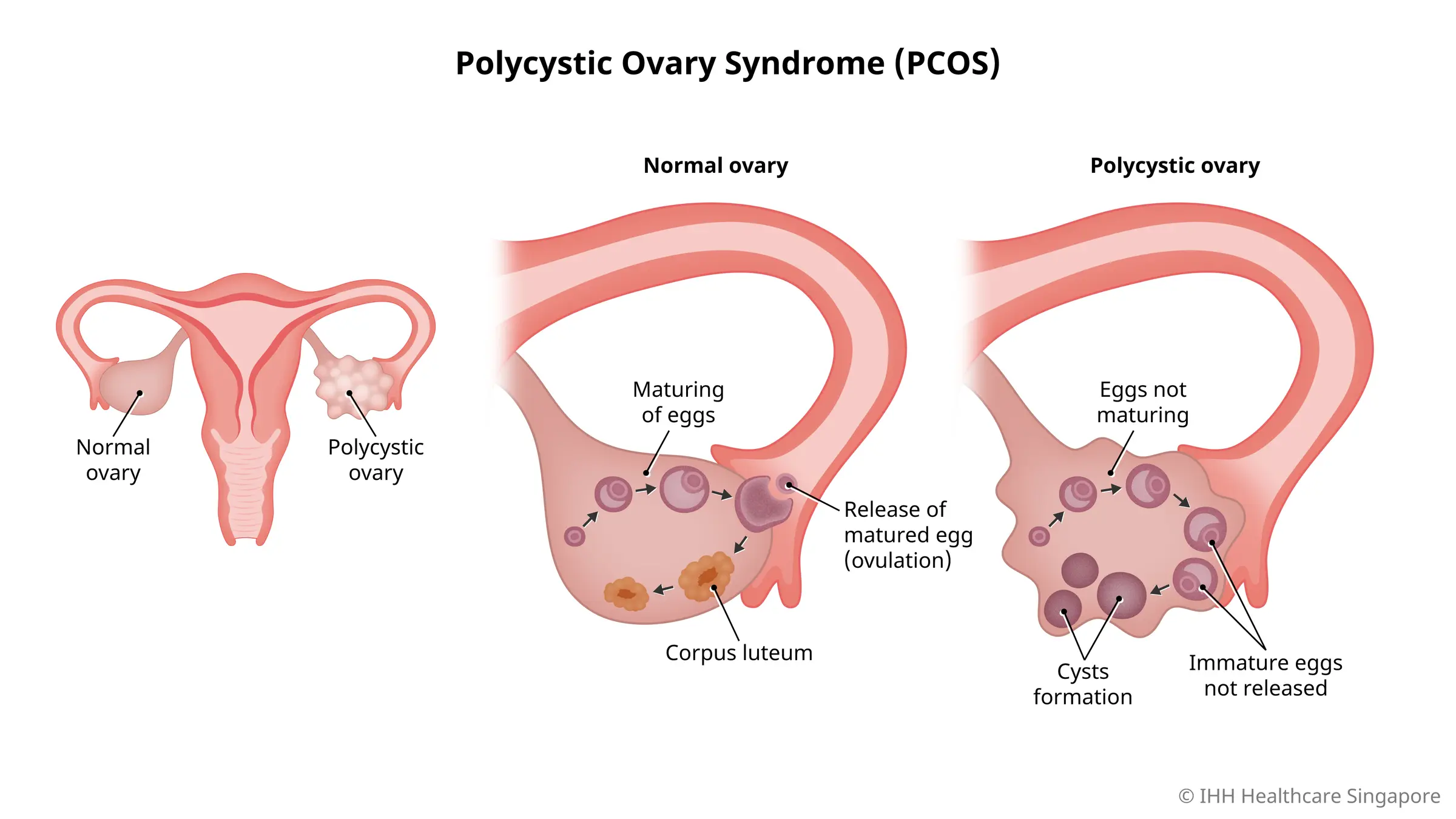
PCOS is more than “having cysts on your ovaries.”
Polycystic ovary syndrome is a hormonal and metabolic condition that can affect menstrual cycles, ovulation and other aspects of health.
Despite the name, not every woman with PCOS has ovarian cysts, and seeing ovarian follicles on an ultrasound alone does not automatically confirm PCOS.
Diagnosis usually depends on the overall pattern of symptoms, medical history, examination and appropriate testing while considering other conditions that can cause similar symptoms.
7 signs that may deserve a closer look
Having one of these symptoms does not automatically mean you have PCOS. But combinations of symptoms may justify proper assessment.
Irregular or missing periods
Long cycles, unpredictable menstruation or periods that disappear for months can sometimes indicate irregular ovulation.
Difficulty conceiving
If ovulation is irregular, the opportunity for conception may occur less predictably. PCOS is one possible cause, but not the only one.
Increased facial or body hair
Increased androgen activity can contribute to coarse hair growth on areas such as the face, chin, chest or abdomen in some women.
Persistent acne or oily skin
Hormonal changes associated with PCOS can contribute to acne in some women, particularly when other symptoms are present too.
Difficulty managing weight
PCOS can occur at any body size, but insulin resistance and weight-management difficulties are common in many women with the condition.
Thinning scalp hair
Hormonal patterns may contribute to scalp hair thinning in some women with PCOS.
Darkened areas of skin
Dark, thickened patches around areas such as the neck, underarms or groin can sometimes occur alongside insulin resistance and deserve medical attention.
Does PCOS mean you cannot become pregnant?
No.
Having PCOS does not mean pregnancy is impossible.
The fertility challenge for many women with PCOS is related to irregular or absent ovulation.
When an egg is not released regularly, opportunities for conception become less predictable.
But fertility should still be assessed as a couple’s issue. Even when a woman has PCOS, male fertility and other female fertility factors can also matter.
Proper assessment looks beyond your period.
Depending on your symptoms and fertility goals, professional evaluation may consider several areas.
How frequently periods occur and whether ovulation appears to be happening regularly.
Certain hormone tests may help when symptoms suggest abnormal androgen activity or another hormonal condition.
PCOS can be associated with insulin resistance and increased metabolic risk in some women.
Thyroid problems, elevated prolactin and other conditions can sometimes produce symptoms that overlap with PCOS.
Imaging may provide useful information, but it should be interpreted alongside the rest of the clinical picture.
Management may differ depending on whether pregnancy is an immediate goal or whether the priority is cycle and metabolic health.
What about supplements for PCOS?
This is where women can easily become overwhelmed.
Search online and you will find countless powders, capsules, teas and fertility products claiming to “balance hormones” or “reverse PCOS.”
Nutritional support may sometimes form part of an individualized wellness plan, particularly when there are dietary gaps or specific nutritional needs.
But no supplement should be treated as a substitute for understanding the condition.
PCOS management may involve nutrition, physical activity, weight management when appropriate, medical treatment, fertility treatment when needed and attention to metabolic health. Nutritional support should fit into that bigger picture.
What should a woman who suspects PCOS actually do?
Record cycle length, missed periods and major changes rather than relying only on memory.
Tell your healthcare professional about acne, hair changes, weight changes, fertility concerns and other symptoms, not only menstruation.
PCOS should not be diagnosed from social media symptoms alone. Other hormonal and medical conditions may need to be considered.
Healthy eating, appropriate physical activity, sleep, body-weight management when needed and monitoring of metabolic risk factors can all be important.
Women with PCOS can become pregnant. When conception is difficult, appropriate fertility evaluation can help determine what needs attention.
Even if PCOS is present, fertility challenges should not automatically be attributed to one partner alone.
Choose supplements based on your actual health needs and appropriate guidance instead of promises of guaranteed pregnancy or instant hormonal correction.
Your body is not asking you to become an expert in hormones. It is asking you to stop ignoring a pattern that keeps repeating.
Stop normalizing years of uncertainty.
Irregular periods do not automatically mean PCOS.
PCOS does not automatically mean infertility.
Weight gain alone does not diagnose PCOS.
And an ultrasound result alone should not replace proper clinical evaluation.
But when several signs keep appearing together, they deserve more than guessing.
Understand the pattern. Identify what may be driving it. Then choose the next step based on information.
Irregular periods, possible PCOS or difficulty conceiving?
Don’t spend another year trying to interpret every symptom alone. Tell the VicMos Wellness team what you have been experiencing and get guidance on an appropriate next step.
Your conversation is handled privately. VicMos Wellness provides wellness guidance and does not replace professional diagnosis, hormonal testing, fertility assessment or emergency medical care.
Continue your wellness journey
Useful wellness guidance, new arrivals and selected offers.
Related articles

Your situation may need a more personal conversation.
Tell the VicMos Wellness team what you are looking for and continue privately on WhatsApp.