Why Do Hemorrhoids Keep Bleeding? 7 Things You Should Know
You wipe after using the toilet and see bright-red blood again. It stops, then days later it happens again. Hemorrhoids can bleed repeatedly—but recurring rectal bleeding shouldn't simply be ignored. Here's what may be happening…
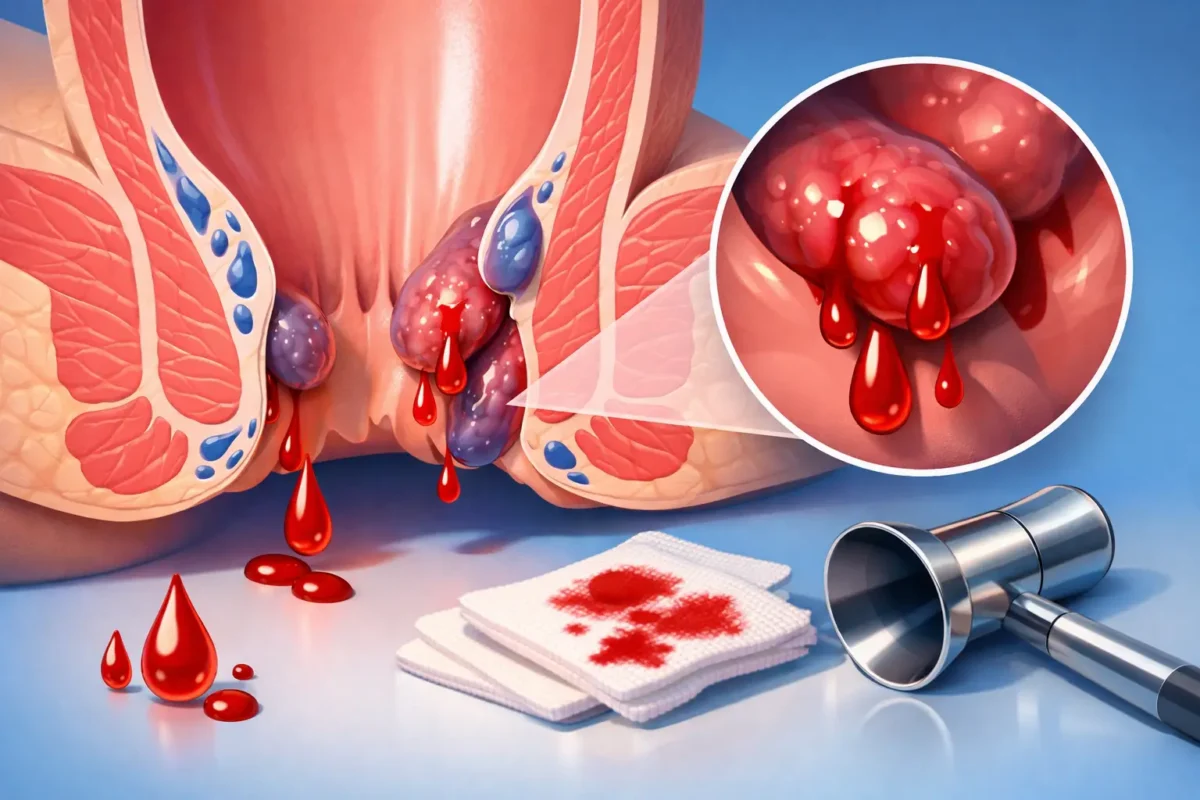
You finish using the toilet, wipe — and there it is again: bright-red blood on the tissue.
Maybe it happened last week. Maybe it stopped for several days. Now you’re seeing blood again and wondering: “Why do my hemorrhoids keep bleeding?”
Hemorrhoids can bleed, particularly during bowel movements. But repeated rectal bleeding should not automatically be blamed on hemorrhoids without appropriate assessment.
Why Can Hemorrhoids Bleed?
Hemorrhoids are swollen vascular tissues in and around the anus and lower rectum.
Internal hemorrhoids can bleed when the tissue becomes irritated, particularly as stool passes through the area.
The blood associated with hemorrhoids is often bright red and may appear on toilet paper, on the surface of stool or in the toilet.
Anal fissures and several other gastrointestinal conditions can also cause rectal bleeding. Persistent or unexplained bleeding deserves proper medical assessment.
1. You May Still Be Straining When Passing Stool
One of the biggest problems is treating the discomfort without changing the bowel habit that may be contributing to it.
If your stool remains hard and you repeatedly strain to pass it, pressure around the anal and rectal area continues.
That can repeatedly irritate hemorrhoidal tissue.
So if bleeding improves and then returns every time you’re constipated, your bowel habits deserve attention too.
2. Your Stool May Be Too Hard
Hard, dry stool can be difficult to pass.
This often means more pushing, more straining and more irritation around already-sensitive tissue.
Increasing dietary fiber and maintaining appropriate fluid intake can help support softer, easier-to-pass stools.
3. You May Be Spending Too Long on the Toilet
The toilet shouldn’t become your reading room or social-media chair.
Sitting there unnecessarily for long periods can increase pressure around hemorrhoidal tissues.
Go when you need to go, avoid excessive straining, finish your bowel movement and get up.
Leave your phone outside the toilet.
Reducing unnecessary toilet sitting is one simple way to change a habit that may be contributing to hemorrhoid problems.
4. The Hemorrhoid May Still Be Irritated
Symptoms do not necessarily disappear immediately just because bleeding temporarily stops.
If constipation, straining or irritation continues, bleeding can recur during another bowel movement.
This is why hemorrhoid care shouldn’t focus only on making visible blood disappear. The factors contributing to repeated irritation matter as well.
5. It Might Not Actually Be Hemorrhoids
This is the point you should not ignore.
Rectal bleeding can have several possible causes.
An anal fissure — a small tear in the lining of the anal canal — is one possible cause. Inflammatory bowel conditions, polyps and other gastrointestinal disorders can also cause bleeding.
That does not mean you should panic every time you see blood. It means you should not diagnose yourself indefinitely.
Bleeding, Itching, Swelling or Pain?
Read our complete guide to hemorrhoids, including common symptoms, possible contributing factors, bowel-care strategies, warning signs and available wellness-support options.
Read the Complete Hemorrhoids Guide →6. You May Be Focusing on Products but Ignoring Constipation
This is an important distinction.
A supplement, cream or other product should not become an excuse to ignore hard stool and repeated straining.
Basic hemorrhoid self-care commonly focuses on improving bowel habits. Depending on your circumstances, that can include:
- Eating more fiber-rich foods
- Maintaining appropriate hydration
- Avoiding excessive straining
- Avoiding unnecessarily long toilet sitting
- Keeping physically active
- Addressing persistent constipation appropriately
7. The Bleeding May Need Medical Assessment
There comes a point where repeatedly saying, “It’s probably piles” is not enough.
If rectal bleeding keeps returning, is unexplained, or occurs with other concerning symptoms, getting assessed is more appropriate than repeatedly self-treating the symptom.
Don’t simply continue treating yourself if you have:
- Heavy or continuous rectal bleeding
- Dizziness, faintness or unusual weakness
- Black or tar-like stool
- Severe or rapidly worsening pain
- Significant abdominal pain
- Fever with severe anal or abdominal symptoms
- Persistent or unexplained changes in your bowel habits
Can Bleeding Hemorrhoids Get Better?
Many people with mild hemorrhoid symptoms improve with conservative measures and changes to diet and toilet habits.
But some hemorrhoids persist, prolapse, thrombose or continue causing troublesome symptoms and may require professional treatment.
The right approach depends on what is actually causing your symptoms and how severe they are.
What Should You Do Today?
Start by looking beyond the blood itself.
Ask yourself whether you’re constipated, whether your stools are regularly hard, whether you strain, and whether you spend unnecessary time sitting on the toilet.
Then pay attention to how often the bleeding occurs and whether anything else has changed.
If symptoms are persistent, severe or unclear, get appropriate professional guidance rather than repeatedly guessing.
Not Sure Whether Your Symptoms Are Hemorrhoids?
If you’re dealing with recurring bleeding, pain, swelling, constipation or other digestive-health concerns, you can discuss your situation privately before deciding what to do next.
Request a Private ConsultationThe Bottom Line
Hemorrhoids can cause bright-red rectal bleeding, particularly during bowel movements.
But if the bleeding keeps returning, don’t focus only on stopping the blood. Look at constipation, stool consistency, straining and toilet habits — and remember that hemorrhoids are not the only possible cause of rectal bleeding.
Repeated bleeding deserves understanding, not endless guessing.
Health information: This article provides general educational information and does not diagnose hemorrhoids or another cause of rectal bleeding. Seek appropriate medical assessment for persistent, recurrent, severe or otherwise concerning bleeding. Heavy bleeding, fainting, dizziness or severe associated symptoms may require urgent medical attention.
Continue your wellness journey
Useful wellness guidance, new arrivals and selected offers.
Your situation may need a more personal conversation.
Tell the VicMos Wellness team what you are looking for and continue privately on WhatsApp.